
Google Sheets Travel Budget Template: Your Ultimate Guide to Stress-Free Travel Planning
Have you ever found yourself at the airport, staring at your wallet, wishing you’d planned better? We get it. Traveling can be exhilarating, but it can also be a little messy when it comes to finances. That’s where our Google Sheets travel budget template comes to the rescue. Not only does it help keep your spending in check, but it also gives you more time to enjoy the view, or fit in that extra slice of local pizza. So, whether you’re dreaming of a tropical escape or a scenic road trip, let’s jump into how a travel budget template can make your journey smooth and fun.
Google Sheets Travel Budget Template
Using a travel budget template is like having a financial GPS for your adventures. It guides us through the often-treacherous landscape of expenses, helping us avoid those nasty surprises that pop up unexpectedly.
One major benefit is that it enhances our awareness of spending. By tracking every dollar we plan to spend, we become more conscious about our choices. It’s astounding how even small expenses can add up, isn’t it? With a template, we gain clearer insights into where our money is flowing. We can allocate funds for must-see attractions and local delicacies, ensuring we indulge without going broke.
Another perk? It encourages accountability. When we use a structured approach to budgeting, we’re less likely to lose track of our finances. Plus, we can share the template with our travel buddies, fostering a team spirit. It’s about making collective decisions rather than veering off course alone. And let’s be honest: who doesn’t love a little competition when it comes to holiday spending limits?
Setting Up Your Google Sheets Template
Setting up our Google Sheets template is as easy as hitting the road after a long winter. First, we need to create a new spreadsheet in Google Sheets. Naming conventions help, so let’s go with something like “Travel Budget 2025”.
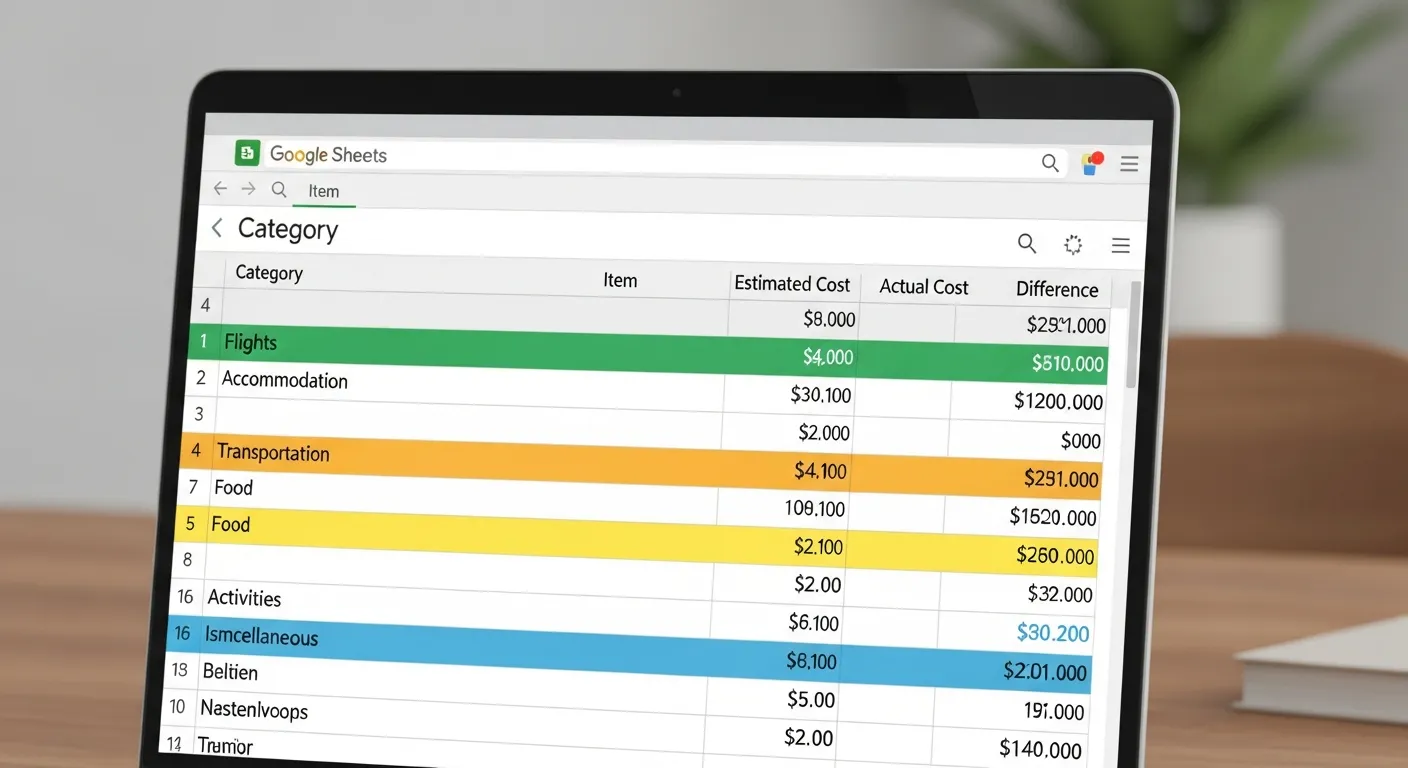
Next, we’ll lay out the structure. Typically, we want columns for:
- Expense Category: Flights, accommodation, food, activities, etc.
- Estimated Costs: What we think we’ll spend on each category.
- Actual Costs: This is where we’ll log what we actually spent.
- Difference: Calculating discrepancies helps us understand where we are overspending or saving.
We can color-code rows to signify when we’re under or over budget. Functional and visually pleasing? Check. Now, if we want to add flair to our template, we can incorporate drop-down lists for easy expense categorization. It’s all about creating a layout that works for us, isn’t it?
Key Features Of An Effective Travel Budget Template
Customizing Your Travel Budget Template
A one-size-fits-all approach doesn’t cut it when we travel. Customizing our template allows us to tailor it to our unique needs. For instance, we might want to add a column for tips or souvenirs.
It’s vital to engage in a little self-reflection and think about what we tend to spend on most during vacations. Are we foodies, or do we prefer experiences? Knowing our tendencies will help us build a budget that feels realistic and versatile.
Integrating Other Tools With Your Template
We can also supercharge our budgeting by integrating it with other tools. Consider linking it to expense management apps or plug-ins that track our spending in real-time. Using these technologies not only streamlines the process but prevents those pesky manual entries that can often lead to errors. When we integrate our budget with tools like these, we maintain clarity while moving around.
Common Mistakes To Avoid When Creating A Budget
While crafting our budget, there are a few common pitfalls we must avoid. First up: underestimating our costs. Everyone’s been guilty of thinking we can do a trip on a shoestring budget, only to find ourselves cutting corners at the worst times. It’s better to account for an emergency fund to tackle any eventualities.
Another mistake we make is overlooking routine expenses. Just because we’re traveling doesn’t mean we get to ignore daily costs like transportation or kitchen necessities. Finally, failing to adjust the budget as we go can be detrimental. If we notice we’re spending more on meals than anticipated, we should tweak other areas to accommodate.
Tips For Staying On Track With Your Travel Budget
Staying within budget can feel daunting at times, but some foolproof strategies can guide us through. First, we should regularly update our spreadsheet. Making it a nightly ritual can help us stay aware of our spending patterns.
Also, setting daily limits makes sticking to our budget much easier. If our daily limit is $100, we can enjoy the freedom of spending without anxiety as long as we remain within that cap. And let’s not forget maintaining realistic expectations. Travel requires spontaneity: sometimes, we’ll just want to splurge on that amazing dinner or activity. It’s all about moderation and planning.